epoxy flooring contractor use
Many property owners planning to install epoxy flooring often ask what materials does the epoxy flooring contractor use because the quality of materials has a major impact on durability, appearance, and long-term performance. A professional epoxy flooring contractor carefully selects materials based on the project’s needs, environmental conditions, and the expected level of traffic. Understanding the types of materials used helps clients make informed decisions and ensures they receive a high-performing floor that can withstand heavy use, chemicals, and wear.
One of the primary materials an epoxy flooring contractor uses is the epoxy resin itself. Epoxy resin is typically made up of two components: the resin base and the hardener. When combined in precise ratios, these materials create a strong, durable coating that bonds tightly to concrete. When people ask what materials does the epoxy flooring contractor use, the resin system is often the first element discussed because different formulations—such as 100% solids, solvent-based, or water-based epoxy—offer varying levels of strength, gloss, chemical resistance, and thickness.
Another important material used by an Epoxy flooring contractor includes primers and bonding agents. Primers help ensure proper adhesion between the concrete surface and the epoxy layer. They penetrate the pores of the concrete and create a base coat that improves bond strength. High-quality primers are essential for preventing problems such as peeling or delamination, especially in areas with moisture or surface imperfections.
Decorative materials are also commonly used. When clients ask what materials does the epoxy flooring contractor use, decorative flakes, quartz granules, and metallic pigments are often part of the conversation. Decorative flakes create a textured, colorful finish that adds slip resistance and hides minor imperfections. Quartz systems enhance durability and are ideal for commercial or industrial spaces requiring a strong, non-slip surface. Metallic pigments are used to create stunning, marbled effects suitable for showrooms, retail spaces, and modern home interiors.
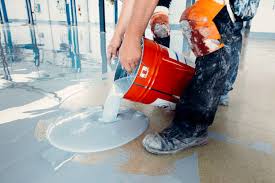
What materials does the epoxy flooring contractor use?
Aggregates and additives are another set of materials essential in epoxy flooring installations. An experienced epoxy flooring contractor may incorporate non-slip additives such as aluminum oxide, silica sand, or polymer grit to improve traction. These materials are especially useful in garages, kitchens, walkways, or industrial facilities where slip resistance is a safety priority.
Topcoats and sealers are additional materials that ensure durability and protect the epoxy surface. A clear polyurethane or polyaspartic topcoat is often applied to enhance UV resistance, prevent yellowing, and provide an extra layer of protection against stains, abrasion, and chemical spills. When clients ask what materials does the epoxy flooring contractor use, topcoats are a key part of the system because they dramatically extend the lifespan of the flooring.
Surface repair materials also play a role. Before applying epoxy, a professional epoxy flooring contractor may use crack fillers, patching compounds, and leveling materials to rebuild damaged concrete areas. These repairs create a smooth, even base that ensures the epoxy coating cures correctly. Understanding what materials does the epoxy flooring contractor use helps clients appreciate the level of precision, quality, and planning that goes into a successful epoxy installation. The right combination of resin, primers, additives, decorative elements, and topcoats ensures the flooring is strong, long-lasting, and visually appealing.